5 Essential Habits for Peak Productivity
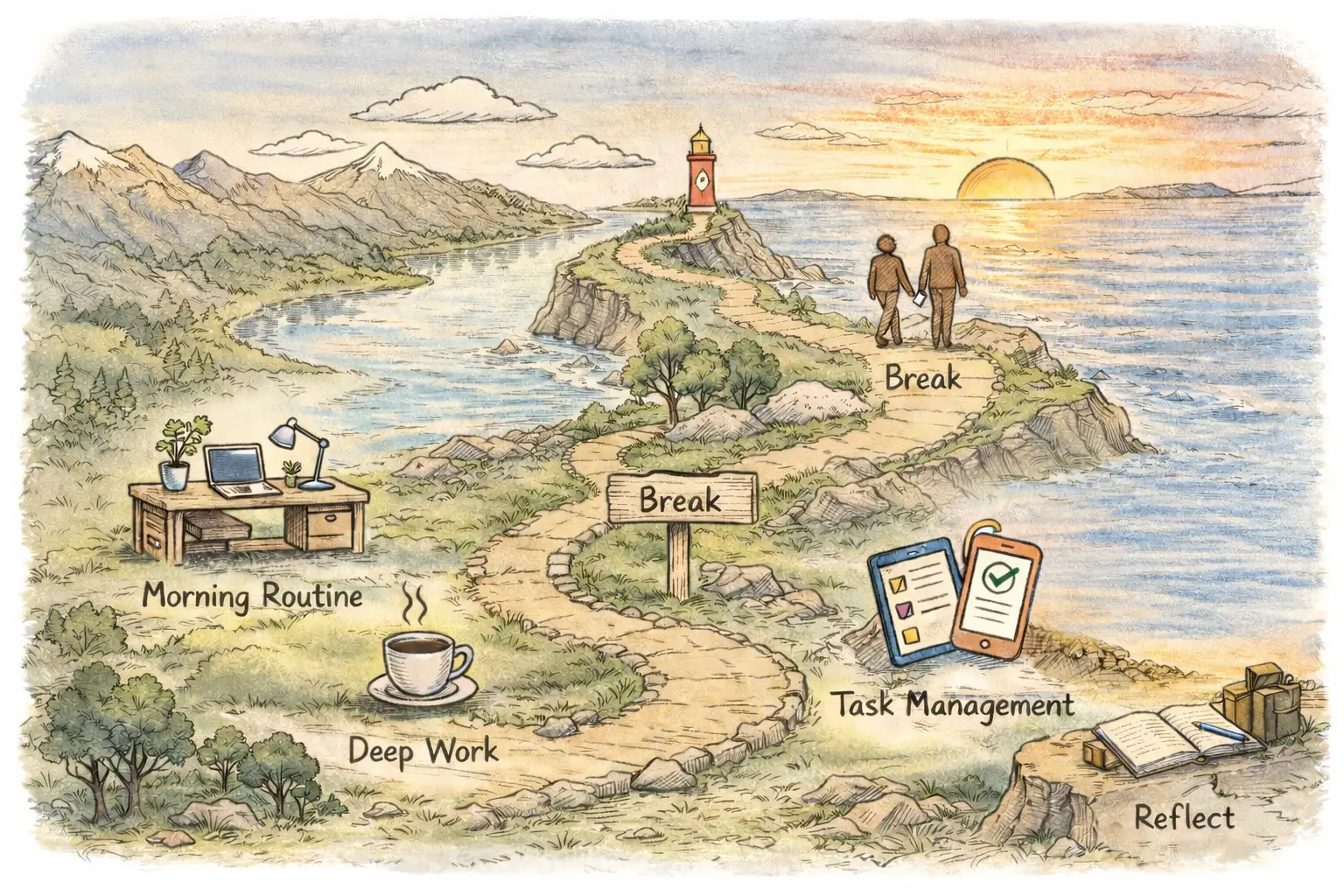
Achieving peak productivity isn't about working harder but working smarter, and building the right habits is the foundation for sustained high performance in any endeavor.
In today's fast-paced world, distractions are everywhere, and maintaining consistent output can feel like an uphill battle. Peak productivity involves optimizing your energy, time, and mindset to accomplish more with less effort. Studies from experts like Cal Newport in "Deep Work" emphasize how deliberate habits can transform scattered efforts into focused achievements. This not only boosts your professional success but also enhances personal satisfaction, reduces burnout, and allows for better work-life balance. We'll delve into the science behind these habits, their psychological benefits, and real-world applications to help you integrate them seamlessly.
I encourage you to evaluate your current routines and adopt these habits to elevate your productivity game. For an in-depth dive, check out the book "Atomic Habits" by James Clear, which breaks down habit formation into actionable steps. Another gem is "The Power of Habit" by Charles Duhigg, exploring how habits shape our lives.
This detailed article explores 5 essential habits that can propel you to peak productivity. By incorporating these, you'll experience sharper focus, efficient task completion, and a proactive approach to challenges. These habits are backed by research and adaptable to various lifestyles, whether you're in a corporate job, freelancing, or pursuing personal projects. Start small, track your progress, and watch as your daily output soars.
Cultivating these habits can lead to a 50% or more increase in daily productivity, according to productivity research, enabling you to achieve goals faster and with greater ease.
So, let's unpack these 5 essential habits for reaching peak productivity.
Remember: habits are formed through repetition and reinforcement, not overnight changes. Aim for consistency over intensity, and use cues, rewards, and accountability to make them stick.
1. Start Your Day with a Morning Routine
A structured morning sets the tone for the entire day, priming your mind and body for optimal performance and warding off reactive tendencies that sap productivity.
Begin by waking up at a consistent time, ideally aligning with natural circadian rhythms for better energy levels. Incorporate elements like hydration, light exercise, meditation, and planning. For example, drink a glass of water upon waking to rehydrate, followed by 10-20 minutes of stretching or yoga to boost blood flow and alertness.
Research from the American Psychological Association shows that morning routines reduce decision fatigue and enhance executive function. To structure yours, use journaling to outline top priorities—limit to three key tasks to avoid overwhelm.
A recommended app is Morning Routine, available for iOS and Android. It allows customizable sequences with timers and reminders. The free version covers basics, while premium adds habit streaks and analytics. Try building a routine around it and comment below on your custom setup.
If apps feel overwhelming, start with a simple checklist on paper. Include gratitude practice to foster a positive mindset, which studies link to higher motivation.
Bonus tip: Expose yourself to natural sunlight within 30 minutes of waking to regulate your internal clock and improve focus throughout the day.
Building a morning routine is like investing in your future self—small daily efforts compound into massive productivity gains.
Bonus tip: Pair your routine with a healthy breakfast rich in proteins and fats to sustain energy, avoiding sugar crashes.
2. Practice Deep Work Sessions
Deep work, as coined by Cal Newport, involves immersive, distraction-free periods dedicated to high-value tasks, allowing for breakthroughs that shallow work can't achieve.
Schedule uninterrupted blocks, ideally 90-120 minutes, when your energy peaks—often mornings for most people. Use techniques like closing doors, silencing devices, and communicating availability boundaries to others.
Neuroscience research indicates that deep work strengthens neural pathways for concentration, leading to faster skill acquisition and creative problem-solving. Track your sessions to identify optimal durations and refine your approach.
An excellent tool is RescueTime, which monitors app usage and blocks distractions. It's free for basic tracking on iOS, Android, and desktop, with premium offering detailed reports and goal setting.
Alternatively, explore ambient noise apps like Noisli for customizable soundscapes that enhance immersion, available on web and mobile.
Note: Start with shorter sessions if you're new to deep work, gradually building tolerance to avoid fatigue.
Mastering deep work can differentiate high achievers, turning hours of effort into exponential results.
Bonus tip: End sessions with a quick review of accomplishments to reinforce progress and prepare for the next block.
Bonus tip: Combine with the Eisenhower Matrix to prioritize tasks, ensuring deep work focuses on what's urgent and important.
3. Implement Regular Breaks and Movement
Sustained productivity requires balancing intense focus with recovery, as prolonged sitting and mental strain lead to diminishing returns and errors.
Adopt the Ultradian rhythm approach: work in 90-minute cycles followed by 20-minute breaks. During breaks, engage in light movement like walking, stretching, or deep breathing to recharge.
Harvard Business Review studies show that strategic breaks improve cognitive function, creativity, and overall output by preventing mental exhaustion. Incorporate micro-breaks every 25-30 minutes for eye rest and posture adjustments.
A useful app is Stretchly, a free cross-platform reminder for breaks, customizable for work intervals. For movement tracking, try Fitbit apps on iOS and Android, which nudge you to move hourly.
If tech isn't ideal, set phone alarms and pair breaks with hydration or snacks to build associations.
Listen to your body—ignoring fatigue can lead to burnout; proactive breaks preserve long-term productivity.
Bonus tip: Use breaks for mindfulness exercises, like a 5-minute guided meditation via apps such as Headspace.
Bonus tip: Stand or walk during calls to integrate movement seamlessly into your day.
4. Leverage Technology for Task Management
Effective productivity hinges on organized systems, and leveraging tech tools streamlines workflows, reduces mental load, and ensures nothing falls through the cracks.
Choose tools that centralize tasks, reminders, and collaborations. For instance, use Kanban boards for visual progress tracking or calendars for time-sensitive items.
Productivity apps backed by data from tools like Asana show teams using them complete projects 45% faster. Customize to your needs—solos might prefer simple lists, while teams need sharing features.
I recommend Notion, a versatile all-in-one workspace for notes, databases, and tasks. It's free for individuals on web, iOS, and Android, with premium for advanced integrations.
For quick captures, Evernote excels at scanning and searching handwritten notes.
Note: Avoid tool overload; start with one and master it before adding more.
Technology amplifies habits—select tools that align with your workflow for maximum impact.
Bonus tip: Integrate AI features in tools like Notion for auto-summarization and idea generation.
Bonus tip: Weekly reviews in your tool to purge completed tasks and realign priorities.
5. End Your Day with Reflection and Planning
Closing the day intentionally cements achievements, processes learnings, and prepares for tomorrow, creating a cycle of continuous improvement.
Spend 10-15 minutes reviewing what went well, what didn't, and adjusting for the next day. Journal wins, challenges, and gratitudes to build resilience.
Psychological studies link evening reflection to better sleep and morning readiness, reducing overnight rumination. Plan top tasks for tomorrow to offload mental baggage.
Use a dedicated journal or app like Day One, focused on reflective journaling with prompts. Available on iOS and Android, free with premium for cloud sync.
If digital isn't your style, a notebook suffices—focus on actionable insights.
Bonus tip: Rate your day on a 1-10 scale and note one improvement area for targeted growth.
Reflection turns experience into wisdom; skip it, and you risk repeating inefficiencies.
These are 5 essential habits I've honed personally to sustain peak productivity, and I'm excited to share them to fuel your journey.
To recap:
- Establish a empowering morning routine to kickstart your day with intention and energy
- Dedicate time to deep work sessions for tackling complex tasks with undivided attention
- Incorporate regular breaks and movement to maintain mental and physical vitality
- Harness technology for efficient task management and organization
- Conclude with reflection and planning to learn from the day and set up success ahead
Embrace these habits progressively; transformation comes from persistent application, leading to profound shifts in your productivity.
What habits have revolutionized your productivity?
Share your stories, favorite tools, and any tweaks to these habits in the comments—let's learn from each other!
Valued this article?
I'd be grateful if you shared it on your social media to help others reach their peak.
Sharing builds a community of doers, so let's inspire more action!
Subscribe to our newsletter for cutting-edge productivity insights right in your inbox. Subscribe now!


Join Our Newsletter
New articles straight to your inbox!